

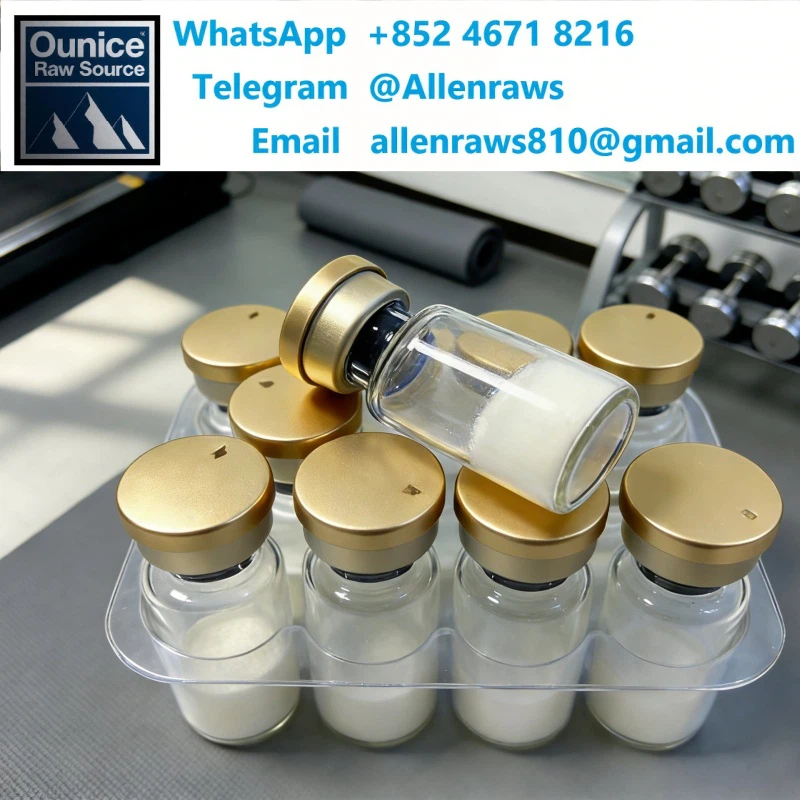
Human Chorionic Gonadotropin (HCG) 5000 IU/vial: Core Introduction
Human chorionic gonadotropin | Pregnancy hormone and LH mimic 5000 IU/vial
Generic name : Human chorionic gonadotropin
Molecular structure : Glycoprotein hormone composed of α and β subunits
Molecular weight : Approximately 36.7 kDa
Purity : ≥95.0% (SEC-HPLC)
Specific activity : ≥5000 IU/vial
Appearance : White lyophilized powder
Storage : Refrigerate at 2-8℃, away from light and stored in a dry place.
Usage and Storage Guide
Human chorionic gonadotropin (HCG):
Human chorionic gonadotropin (HCG) is a glycoprotein hormone highly homologous to luteinizing hormone (LH) in structure. It mimics LH in its action on testicular interstitial cells, stimulating the synthesis and secretion of endogenous testosterone. Unlike direct exogenous androgen supplementation, HCG maintains or restores normal testicular endocrine function by activating negative feedback regulation of the hypothalamus-pituitary-gonadal axis. It plays a crucial role in studying male gonadal function, spermatogenesis regulation, and endocrine feedback mechanisms, and is frequently used as an important tool for assessing testicular function and researching hormone replacement therapy.
Because it can precisely mimic the biological activity of LH without requiring long-term exogenous androgen administration, many researchers in the fields of endocrinology and reproductive medicine choose to use HCG. It effectively avoids testicular atrophy caused by exogenous testosterone, maintains testicular endocrine and spermatogenic functions, and provides a crucial research model for studying hormone replacement therapy, hypothalamic-pituitary-gonadal axis regulation, and the pathophysiological mechanisms of male infertility.
Applications of human chorionic gonadotropin (HCG):
HCG binds to LH receptors on testicular interstitial cells, stimulating the synthesis and secretion of endogenous testosterone, supporting spermatogenesis. HCG is an important tool in reproductive endocrinology research, used to assess gonadal function and regulatory mechanisms.
HCG is widely used in research on reproductive endocrinology, male infertility treatment, and hormone replacement therapy strategies. Its well-defined mechanism of action makes it an important experimental tool for exploring the function of the hypothalamus-pituitary-gonadal axis, assessing testicular responsiveness to gonadotropins, and studying hormonal negative feedback regulation. It is also widely used in preclinical studies of assisted reproductive technology and gonadal function assessment.
Usage and storage methods
1. Reconstitution and preparation :
Recommended solvent :
Specified solvent : The accompanying sterile water for injection
Important note : Do not use solvents, saline, or any buffer solutions containing benzyl alcohol or other preservatives . Incorrect solvents may cause protein denaturation, aggregation, or a sharp decrease in activity.
For experimental dilution : After reconstitution with sterile water for injection, it can be appropriately diluted with sterile physiological saline without preservatives .
Standard preparation procedure :
Solvent preparation :
Remove the accompanying sterile water for injection from the refrigerator (2-8℃) and let it stand until it reaches room temperature.
The entire procedure was performed in strict accordance with aseptic principles and within a biosafety cabinet.
Reconstitution procedure :
Add 1.0-2.0 mL of sterile water for injection to a 5000 IU vial.
With the needle angled downwards, slowly inject the solvent along the bottle wall to avoid directly impacting the lyophilized powder and creating air bubbles.
Gently rotate the vial horizontally in the palm of your hand , without shaking or agitating, until the powder is completely dissolved and the solution is clear.
Preparation concentration: For example, add 1.0 mL of solvent to obtain a stock solution of 5000 IU/mL.
Dispensing and dilution :
After reconstitution, it should be immediately dispensed into single-use doses, or diluted to the required concentration according to the experimental plan.
Dispense using sterile, low-absorption centrifuge tubes.
For lower concentrations, dilute slowly and gently with preservative-free saline solution.
Working concentration/dosage reference :
Animal in vivo experiments : The commonly used dosage range is 50-1000 IU/kg. The specific dosage depends on the animal species, experimental model and dosing frequency (e.g., once every other day or twice a week).
In vitro cell experiments : The commonly used concentration range is 1-100 IU/mL, which needs to be optimized according to the cell line and experimental purpose.
Important note : Dosage must be accurately determined through preliminary experiments. Excessive dosage may lead to abnormally high androgen levels and related side effects.
Key points to note :
Solvent specificity : The supplied sterile water for injection must be used .
Dissolving method : Dissolve only by gently rotating horizontally ; vigorous handling will cause protein denaturation and inactivation.
Aseptic technique : Aseptic technique must be performed in a clean bench or biosafety cabinet.
Observe the solution : The reconstituted solution should be clear and colorless. If turbidity, flocculent matter, or discoloration occurs, the solution must be discarded.
Ready-to-use : It should be used as soon as possible after reconstitution. Even if refrigerated, its activity will decrease over time.
2. Storage conditions :
Unreconstituted lyophilized powder :
Long-term storage : Refrigerate at 2-8℃ . Shelf life is 24 months (subject to product label). Freezing and lyophilizing powder is strictly prohibited .
Strictly protected from light : Must be stored in the original light-proof outer box.
Moisture protection : Keep dry; contains desiccant.
Reconstituted solution :
Use immediately : It should be used immediately after reconstitution for optimal activity.
Short-term storage : If not used immediately, it can be refrigerated at 2-8℃, but must be used within 24 hours .
Freezing is strictly prohibited : Reconstituted solutions must not be frozen , as freezing will damage their glycoprotein structure, leading to irreversible aggregation and inactivation.
Transportation conditions :
Cold chain transportation : Must be transported under refrigerated conditions of 2-8℃, using sufficient ice packs and insulated boxes.
Packaging : Light-proof outer box + high-strength insulated box + temperature monitor.
3. Stability and Processing Standards :
stability :
It is highly sensitive to temperature, mechanical shear force, improper pH, and preservatives.
It is relatively stable in the right solvent, but its stability decreases significantly after dissolution.
Key points for preserving active ingredients :
Strict adherence to refrigerated (non-frozen) storage conditions is key to maintaining long-term viability.
Gentle handling is essential to maintaining the activity after reconstitution.
Need anything, please contact us
|
|
+852 4671 8216 |
|
Telegram |
Allenraws |
|
|
Allenraws810@gmail.com |

Hot Tags: hcg 5000iu/vial regulating reproductive endocrine function, China hcg 5000iu/vial regulating reproductive endocrine function manufacturers, suppliers, factory, Follistatin 344 Stimulates Muscle Satellite Cell Proliferation Made in China, follistatin for bodybuilding, follistatin peptide, MGF Mechano Growth Factor Muscle Repair And growth For Sale Online, sermorelin cost, sermorelin muscle growth


